
Being tough is admirable …. but ignoring symptoms until they become a crisis is not a prize anyone needs to win.
Sometimes, the most important part of a consultation is not the first thing we say. It is the small worry, home remedy, fear, or belief we nearly decided not to mention.
As a GP, I know it can feel uncomfortable to say, ‘I have been taking something else too ….’ or ‘I am worried insulin will make things worse ….’
But healthcare works Best when we can speak honestly, without embarrassment or judgement. Your doctor is not there to win an argument. We are there to help you stay well.
Here are Five common health beliefs people may keep quiet about, especially when family traditions, community advice, limited services, or past experiences shape health choices.
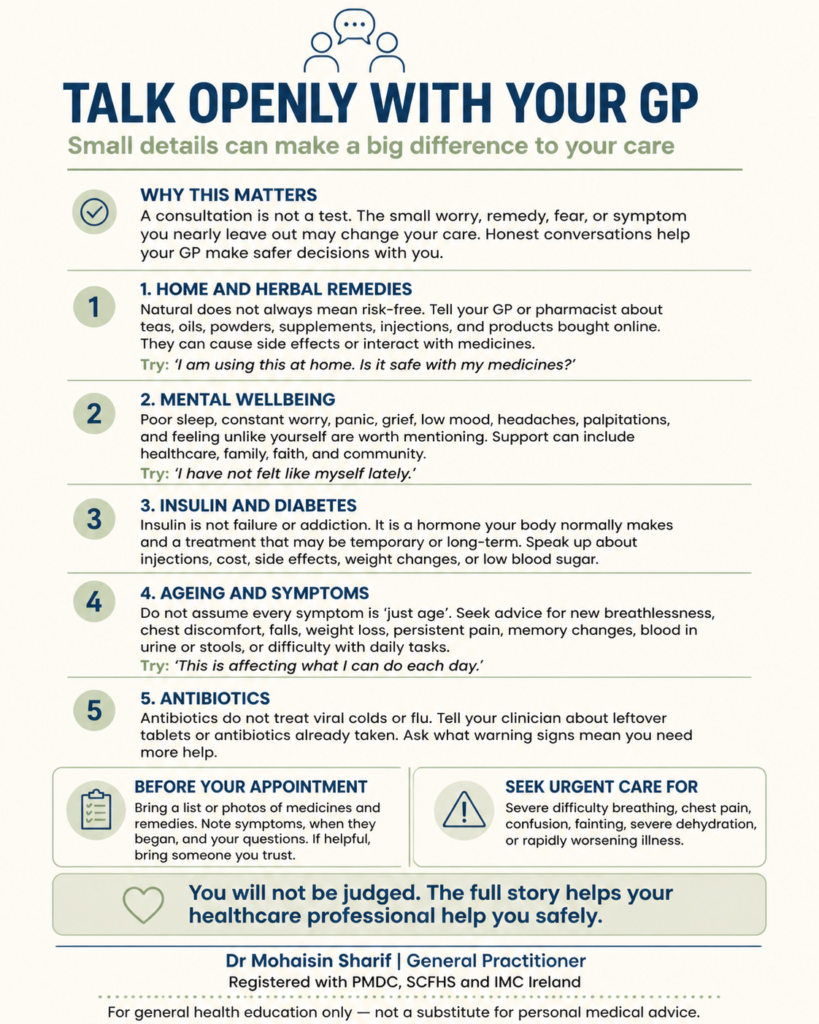
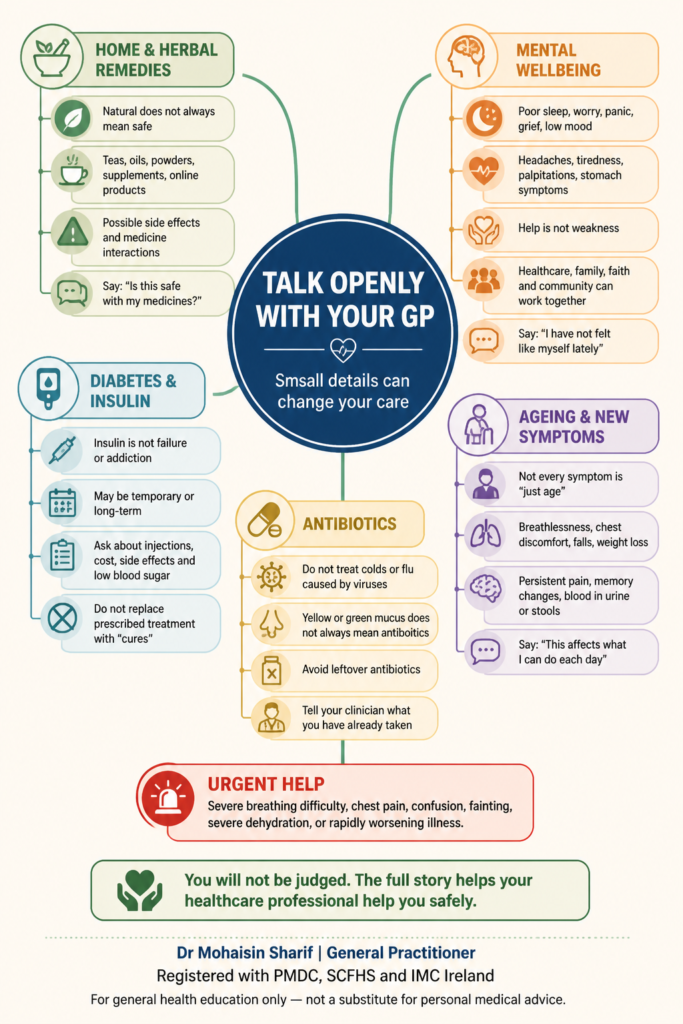
1. ‘It is natural, so it must be safe …..’
Herbal remedies, traditional treatments, home mixtures, and supplements are part of many families’ lives. People may use them in routine for coughs, stomach problems, pain, diabetes, sleep, or children’s colic.
There is nothing shameful about this. The important point is that ‘natural‘ does not always mean ‘risk-free.’ Herbs and supplements can cause side effects, differ in strength, or interact with prescribed medicines. The World Health Organization highlights the need for quality, safety, and informed use when traditional and herbal medicines are used alongside other treatments.
You do not need to throw away every home remedy or come to the clinic carrying a bag of leaves as if it is evidence in a courtroom. Instead, Just tell your GP, nurse, or pharmacist what you use, including teas, oils, powders, tablets, injections, or remedies bought online.
A useful sentence is …: ‘I am also using this at home. Can you check whether it is safe with my medicines?‘
That one sentence can prevent a problem before it starts.
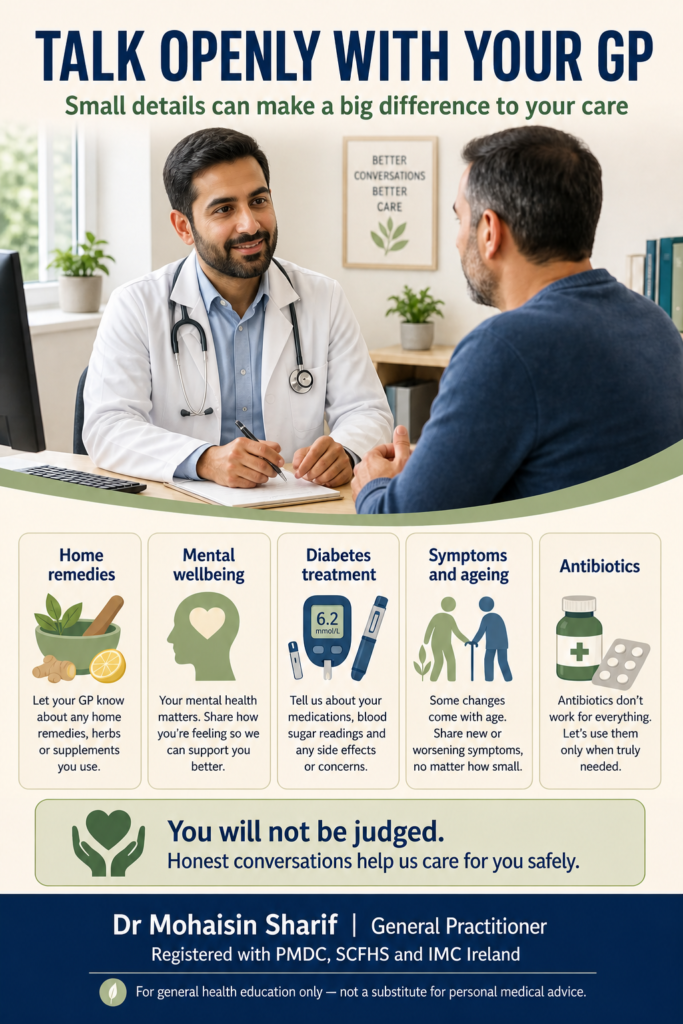
2. My distress is spiritual … or I should be stronger …
Stress, anxiety, low mood, grief, poor sleep, panic, and troubling thoughts can show up in the body. You may feel tired all the time, have headaches, body pain, palpitations, stomach discomfort, or simply feel that something is not right.
Some people understand these experiences through faith, spiritual beliefs, family values, or personal hardship. Those beliefs deserve respect. BUT … at the same time, emotional distress can also be a health issue. It is not a personal failure, a punishment, or a sign that you are weak.
Mental health conditions are common and treatable, yet many people still cannot get the support they need. The WHO estimates that more than one billion people live with a mental health condition.
You can speak with a health professional and still seek support from trusted family, faith leaders, or community members if that matters to you. It is not an either-or choice. Think of it as using more than one tool from the same toolbox.
If you have had poor sleep, constant worry, low mood, or less interest in daily life for more than a couple of weeks, please mention it. You do not need the perfect label. ‘I have not felt like myself lately…’ is enough to begin.
3. ‘Insulin means I have failed … or I will become addicted …’
Insulin has built up quite a dramatic reputation. Some people see it as the ‘final boss‘ of diabetes. Others worry that once they start insulin, their body will become addicted to it.
The truth is kinder and simpler: insulin is a hormone our body normally makes. Taking prescribed insulin is not an addiction. It helps bring blood glucose under control when the body is not making enough insulin or is not using it well.
For some people, insulin is needed for a short time, for example during pregnancy, serious illness, surgery, or very high blood glucose. For others, it is a longer-term part of diabetes care. Neither situation means you have failed with food, exercise, or tablets.
Lifestyle changes matter greatly, and healthy eating is always valuable. But no juice, spice, bitter food, or ‘diabetes cure‘ product should replace medicines prescribed for you. If you are worried about injections, cost, side effects, weight changes, or low blood sugar, say so. These are practical problems, and there are practical solutions as well.
Please do not quietly delay treatment because of something worrying you heard from a neighbour, a WhatsApp message, or a friend of a friend’s cousin. Diabetes advice travels far and wide … not all of it deserves a passport.
4. ‘As I am getting older … Of course I ache, forget things and get breathless …’
Ageing is real. Knees may complain more loudly, reading glasses may become permanent companions, and getting up from a low sofa can feel like a strategic operation.
But not every symptom should be dismissed as ‘just age.’
New or worsening breathlessness, chest discomfort, unexplained weight loss, falls, persistent pain, low mood, memory changes, urine leakage, blood in urine or stools, or finding it harder to manage everyday tasks all deserve a conversation with a clinician. Many causes can be treated, improved, or at least supported early.
The WHO describes ageism as stereotypes, prejudice, and discrimination based on age. It can also become self-directed when people start to believe poorer health is simply something they must accept.
Being tough is admirable. Ignoring symptoms until they become a crisis is not a prize anyone needs to win.
Try replacing … ‘I do not want to bother the doctor’ with ‘This is affecting what I can do each day…’ That gives your GP a much clearer picture.
And finally ….
5. ‘Antibiotics cure colds, flu and almost everything else …’
When you feel sick or suffer … with a cough, sore throat, fever, blocked nose, or body aches, it is completely understandable to want something strong. Antibiotics can be lifesaving ONLY …. when they are needed for certain bacterial infections.
As antibiotics do not treat viruses, including colds and flu. They will not make a viral illness disappear faster, even when mucus looks yellow or green … a colour that has caused a surprising amount of unnecessary panic over the years.
Taking antibiotics when they are not needed can cause side effects and adds to antimicrobial resistance. This means bacteria learn to resist medicines that once worked well, making future infections harder to treat unfortunately.
Before the appointment, tell your GP/Clinician if you have already taken antibiotics, leftover tablets, medicines from a pharmacy, or remedies from home. This is not about being told off. It helps Doctor decide what is safest for you now.
For many Viral illnesses, the best treatment is rest, fluids, symptom relief, and clear advice on warning signs. Seek urgent medical help for severe breathing difficulty, chest pain, confusion, dehydration, a rapidly worsening illness, or if you are worried about a baby, an older adult, pregnancy, or someone with a serious long-term condition.
The Questions Worth Asking …
A good consultation is not a test. You cannot fail it by admitting that you were worried, delayed treatment, tried a remedy, or did not understand the plan.
If you are unsure what to share, start with one of these:
- I have been using a home or herbal remedy too …
- I am worried about starting this medicine …
- Someone told me this treatment is harmful, is that true …?
- I thought this symptom was just part of ageing …
- I took some antibiotics before I came …
The small detail you nearly leave out may be the detail that changes your care. You deserve to be heard, and your healthcare professional needs the full story to help you safely.
Disclaimer:
This article is for general health education only and does not replace personal medical advice, diagnosis, or treatment. Please speak to a qualified healthcare professional about your own symptoms, medicines, and circumstances. Seek urgent medical care if you have severe, sudden, or rapidly worsening symptoms.
About the Author:
Dr Mohaisin Sharif is a General Practitioner registered with PMDC, SCFHS and IMC Ireland. He is also a medical writer with a special interest in evidence-based public education, compassionate primary care, and improving access to health information for underserved and rural communities.
References:
- World Health Organization. Traditional medicine: questions and answers.
- World Health Organization. Key technical issues of herbal medicines with reference to interactions with other medicines.
- World Health Organization. Mental health: strengthening our response.
- World Health Organization. Global report on ageism.
- Centers for Disease Control and Prevention. Healthy habits: antibiotic do’s and don’ts.
- Centers for Disease Control and Prevention. Antibiotics aren’t always the answer.
- Australian Centre for Disease Control. Antibiotics won’t do for colds and flu.