
When food becomes a worry, focus on what matters most!
A child with fever who suddenly refuses food can make any parent anxious. The good news is that, in many common childhood infections, poor appetite for a short time is normal. The real priorities are fluids, comfort, close observation, and knowing when your child needs urgent medical help.
If a child eats very little for a day or two, that is usually less important than whether they are drinking, passing urine, staying alert, and breathing comfortably. In simple terms: Do not panic about food first. Think fluids first …!
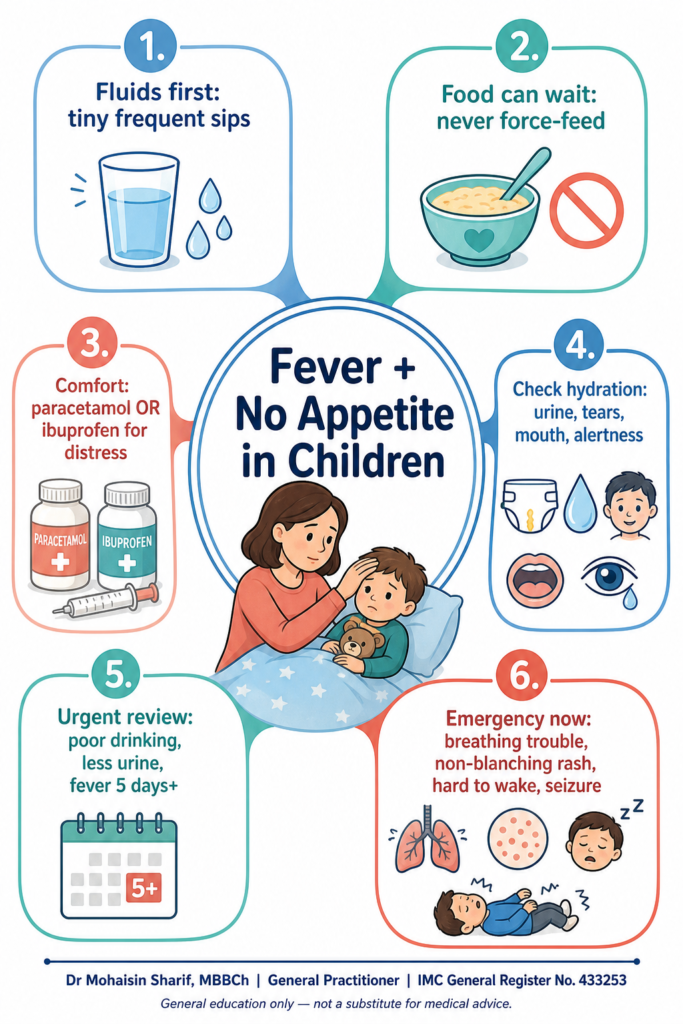
Why do children often stop eating during a fever …
During infection, the body releases inflammatory signals that can reduce appetite and increase tiredness. This is part of the body’s normal illness response, not automatically a sign that something dangerous is happening.
That is why forcing food usually does not help. It may upset a child more, trigger vomiting, and turn meals into a battle. A better approach is to offer reassurance, small sips of fluid, and light food only when the child shows interest.
What to do at home …
1. Focus on fluids, not full meals
Offer small amounts often. This works better than pushing a full cup or full plate.
Good options include:
- Breastfeeds or formula for babies who normally take them.
- Water in small sips for older infants and children.
- Milk, soup, yoghurt drinks, or ice lollies if tolerated.
- Oral rehydration solution if there is vomiting or diarrhoea.
- For children older than 6 months with mild dehydration who refuse oral rehydration solution, half apple juice mixed with half water can be a practical short-term option.
A useful trick is to give 5 mL, about one teaspoon, every 2 to 5 minutes if your child feels sick or keeps vomiting. Tiny amounts are often easier to keep down than larger drinks.
2. Offer food gently, but do not force it
When your child wants to eat, keep it simple:
- Toast
- Rice
- Banana
- Yoghurt
- Soup
- Crackers
- Soft familiar home foods
A few missed meals are usually not harmful in a short feverish illness. Most children start eating again as they begin to recover.
3. Treat distress, not just the temperature
Fever medicine is meant to help a child who is uncomfortable, miserable, or in pain. It is not necessary to chase a perfectly normal temperature if your child is otherwise coping reasonably well.
Paracetamol or ibuprofen may help if your child is distressed. Use one medicine at a time and follow the correct age- or weight-based instructions on the packet or from your clinician. They should not be given together at the same time.
Also avoid tepid sponging, cold baths, or heavy wrapping. These measures can make children more uncomfortable rather than helping them.
Signs your child may be getting dehydrated …
Watch for:
- Dry mouth or sticky lips
- Fewer wet nappies or less urine than usual
- No tears when crying
- Sunken-looking eyes
- A baby becoming unusually sleepy, floppy, or hard to wake
- Refusing fluids completely
- Vomiting everything offered
If any of above signs are developing, your child should be reviewed promptly.
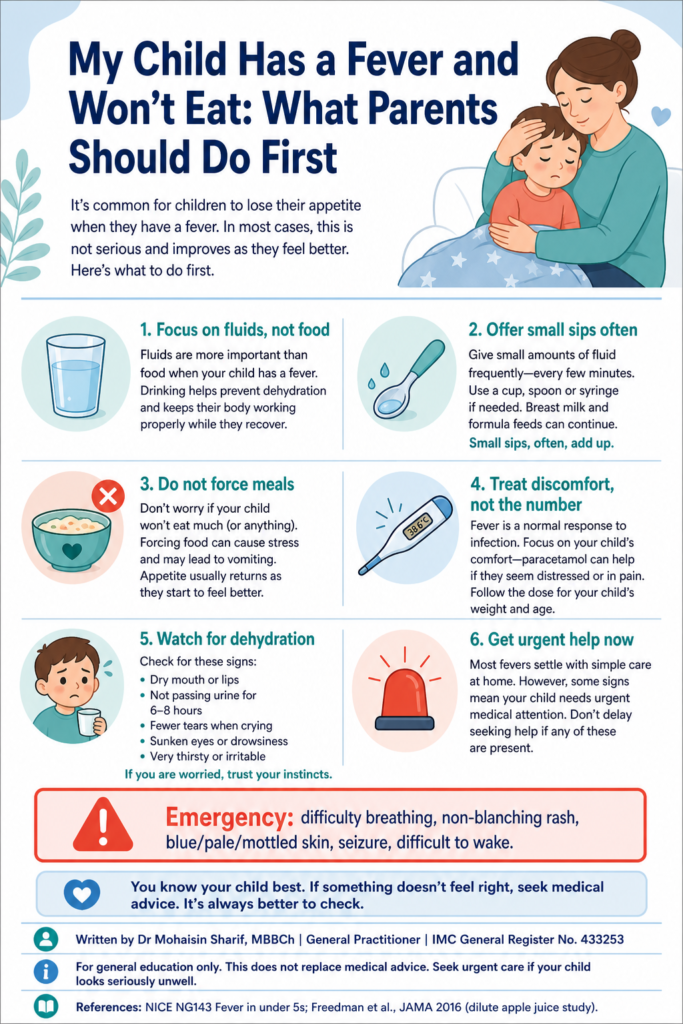
When to get urgent medical help … (Non Negotiable)
Seek same-day medical review if:
- Your baby is under 3 months and has a temperature of 38°C or above.
- Your baby is 3 to 6 months and has a temperature of 39°C or above.
- Your child is drinking poorly or passing much less urine.
- Fever lasts 5 days or more.
- Your child is getting worse instead of better.
- There is persistent vomiting, severe pain, a limp, or swelling in a joint.
🚨 Go to emergency care immediately if your child has …:
- Difficulty breathing, grunting, or severe chest indrawing.
- A rash that does not fade when pressed.
- Blue, pale, mottled, or ashen skin.
- A seizure, severe drowsiness, confusion, or difficulty waking.
- A stiff neck, bulging fontanelle, or signs of severe illness.
- Cold hands and feet with extreme weakness or poor responsiveness, which may suggest shock.
A simple parent action plan …
If your child has a fever and will not eat, use this plan:
- Check how your child looks overall, not just the thermometer reading.
- Offer frequent small drinks.
- Stop pushing meals for now.
- Use fever medicine only if your child is distressed.
- Watch urine output, alertness, breathing, and hydration signs.
- Escalate early if red flags appear or your instinct tells you something is wrong.
About Dr Mohaisin Sharif
Dr Sharif is PMDC, SCFHS & IMC-registered General Practitioner with more than five years of full-time independent GP experience in Saudi Arabia and Pakistan. His work includes acute care, paediatrics, chronic disease management, women’s health, safe triage, and patient-centred family medicine, with a special interest in practical health education for parents and communities.
Disclaimer
This article is for general education only and does not replace a medical consultation, diagnosis, or treatment plan. Children can deteriorate quickly. Seek urgent medical care if your child looks seriously unwell, cannot keep fluids down, is difficult to wake, develops breathing difficulty, has a non-blanching rash, or if you are seriously concerned.
References/More Reading
- NICE: Fever in under 5s — assessment and initial management
- NICE recommendations page: fever in under 5s
- NHS: High temperature (fever) in children
- NHS inform: Fever in children
- JAMA: Effect of Dilute Apple Juice and Preferred Fluids vs Electrolyte Maintenance Solution
- BMJ Education & Practice: NICE guideline review of NG143